
How to Read a Portuguese Restaurant Menu: The Ultimate Guide
Published on 2026-01-31
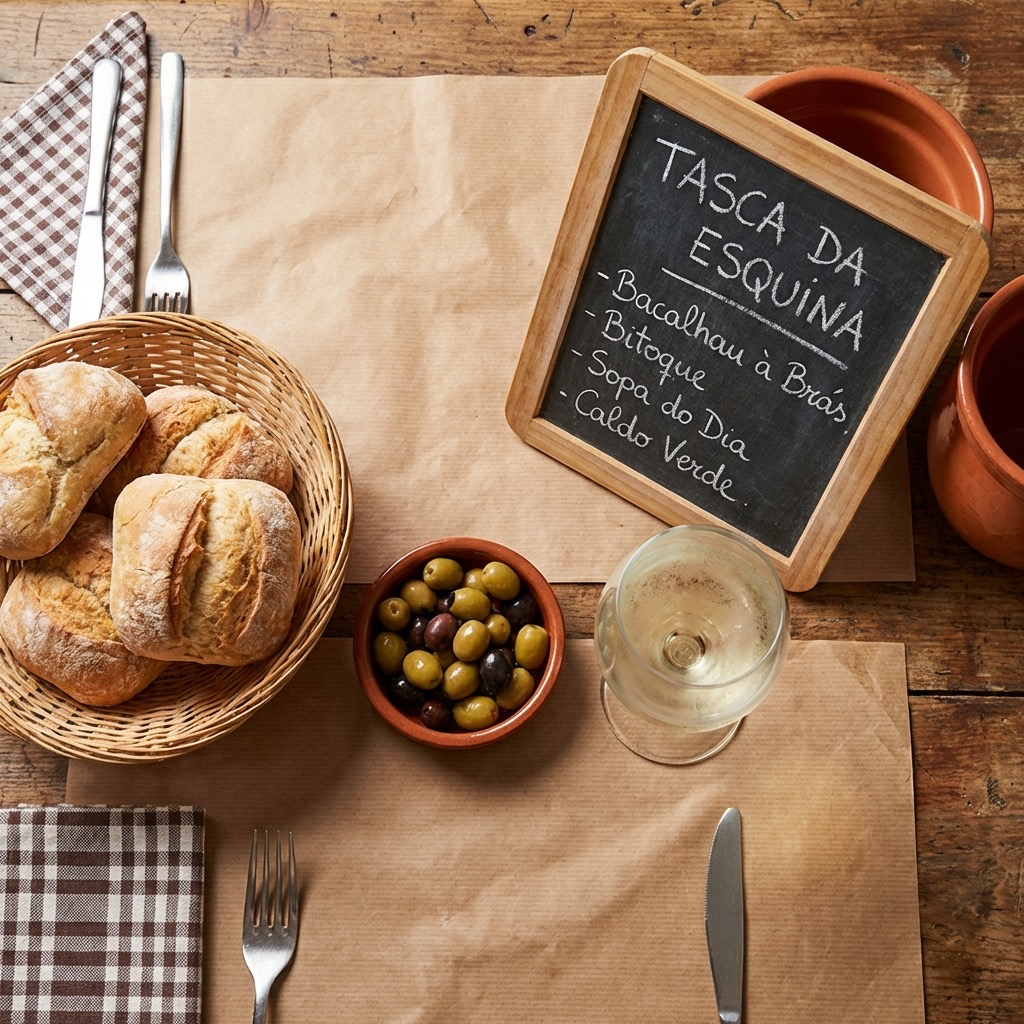
You’ve arrived in Lisbon or Porto. You’ve found a charming little restaurant (a Tasca) with paper tablecloths and a TV playing football in the corner. You sit down, hungry and ready for an authentic experience.
Then the waiter hands you the menu.
It’s a wall of text. There are no pictures. And you have no idea what a Bitoque or Bacalhau à Brás is.
Panic sets in. You see a word you recognize—Hambúrguer—and you almost order it. Stop!
Ordering food in Portugal is one of the greatest joys of traveling here, but you need the secret decoder ring. This guide will walk you through a typical Portuguese meal, line by line, so you can order like a local and avoid the tourist traps.
Phase 1: O Couvert (The Bread Trap)
Before you even order, the waiter will likely bring a basket of bread, olives, sardine pâté, and maybe some cheese or cured ham (Presunto).
Important Rule: In Portugal, this is not free.
If you eat it, you pay for it. If you don't touch it, they will take it away and you won't be charged. It’s usually cheap (€2–€4), and honestly, the bread and olives are usually delicious. But don't be shocked when you see Couvert on the bill.
Vocabulary to Know:
- Pão: Bread
- Azeitonas: Olives
- Manteiga: Butter
- Queijo: Cheese
- Patê: Pâté (usually sardine or tuna)
Phase 2: As Entradas & A Sopa (Starters)
Portuguese meals often start with a soup. It’s cheap, healthy, and traditional. The most famous is Caldo Verde (Green Broth), made with potato purée, thinly sliced kale, and a slice of chouriço.
Vocabulary to Know:
- Sopa do Dia: Soup of the day
- Caldo Verde: Traditional kale and potato soup
- Salada Mista: Mixed salad (usually lettuce, tomato, onion)
- Amêijoas à Bulhão Pato: Clams in garlic, olive oil, and cilantro sauce (A must-try!)
Phase 3: Prato Principal (The Main Dish)
This is where the menu gets intimidating. Portuguese menus are often divided by protein type. Here is your cheat sheet.
Carnes (Meats)
Portugal is a pork (Porco) country, but you'll find plenty of options.
- Bitoque: This is the national staple. It is a thin steak (usually fried in garlic/wine sauce) served with a fried egg on top, fries, rice, and salad. It’s cheap, filling, and available everywhere.
- Prego: Similar to a Bitoque, but often served as a sandwich (Prego no Pão).
- Secretos de Porco Preto: "Black Pork Secrets." This is a specific cut of Iberian pig that is incredibly juicy and fatty (in a good way). Highly recommended.
- Frango de Churrasco: Grilled chicken (Piri-piri chicken).
- Alheira: A game sausage (invented by Jews during the Inquisition to hide their religion). It looks like a sausage but contains no pork—usually poultry and bread.
Peixes (Fish)
You are by the ocean; the fish is incredible.
- Bacalhau: Salted cod. They say there are 365 recipes—one for every day of the year.
- Bacalhau à Brás: Shredded cod with shoestring fries and scrambled eggs. (The beginner favorite).
- Bacalhau com Natas: Cod baked with cream and potatoes.
- Bacalhau à Lagareiro: Roast cod soaked in olive oil with punch potatoes.
- Peixe Grelhado: Grilled fish. Usually served whole (with head and bones). You dissect it yourself!
- Dourada: Sea Bream (Mild, white fish).
- Robalo: Sea Bass.
- Sardinhas: Sardines (Best in summer/June).
- Polvo: Octopus. Usually served à Lagareiro (roasted with olive oil). It is incredibly tender in Portugal, not chewy.
How do you want it cooked?
- Grelhado: Grilled
- Frito: Fried
- Assado: Roasted
- Cozido: Boiled
Advertisement
Phase 4: A Bebida (The Drink)
If you order water, the waiter will ask: "Com gás ou sem gás?"
- Sem gás: Still water (No gas).
- Com gás: Sparkling water (With gas).
Wine Tips:
- Vinho Verde: "Green Wine." It’s not actually green; it means "young wine." It’s slightly sparkling, acidic, and served ice cold. Perfect for lunch.
- Vinho da Casa: House wine. Usually very cheap and surprisingly decent. You can order it by the glass (copo) or bottle (garrafa) or pitcher (jarro).
Phase 5: A Sobremesa (Dessert)
Even if you are full, the waiter will ask: "Vai uma sobremesa?"
- Pastel de Nata: Custard tart (though usually eaten at cafés, not restaurants).
- Mousse de Chocolate: Chocolate mousse. (Ask if it’s Caseiro - homemade).
- Baba de Camelo: "Camel's Drool." Don't let the name scare you! It’s a delicious caramel mousse made from condensed milk and eggs.
- Arroz Doce: Sweet rice pudding with cinnamon.
Phase 6: A Conta (The Bill)
When you are ready to leave, you need to catch the waiter's eye.
- "A conta, por favor." (The bill, please).
- "Pode trazer o Multibanco?" (Can you bring the card machine?)
Do you tip in Portugal?
This is controversial, but here is the local rule: Tipping is not mandatory like in the USA, but it is appreciated.
- Coffee: Leave the small change (10-20 cents).
- Lunch/Dinner: Round up. If the bill is €28, leave €30. If the service was amazing, leaving 5-10% is generous.
- Tourist Areas: In purely tourist zones, tipping is becoming more expected, but never feel pressured to leave 20%.
Summary Checklist
- Don't eat the bread unless you want to pay for it.
- Bacalhau à Brás is the safest (and tastiest) option for beginners.
- Vinho Verde is the perfect lunch wine.
- "Sem Gás" means still water.
- Relax. Portuguese dining is slow. Don't expect to be in and out in 45 minutes. Enjoy the conversa (conversation).
Ready to practice ordering? Start your first lesson on PortuTalk and listen to how these words actually sound!
Advertisement
Start Learning Today
Join PortuTalk to unlock interactive lessons, listening exercises, and more.
Sign up for FreeNo credit card required.