
CIPLE Speaking Exam: The 5 Role-Plays You Should Practice First
Published on 2026-07-06
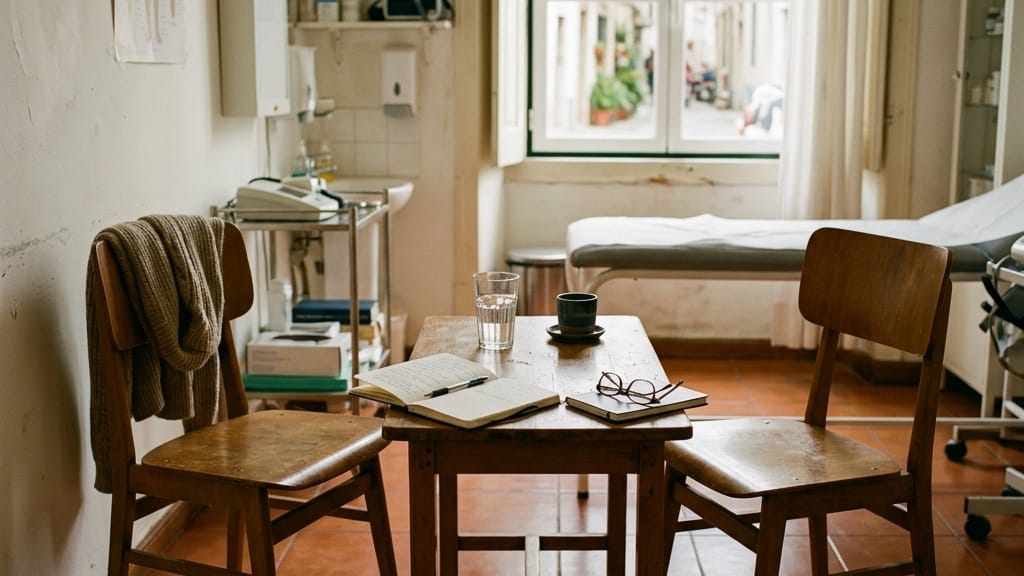
The written parts of the CIPLE exam, you can grind alone with past papers. The speaking section is the one that wakes people up at 3 a.m. — fifteen-odd minutes, face to face, with an examiner who will hand you a card and say: you're at the pharmacy, you have a headache, go.
Here's the secret that should lower your heart rate: the CIPLE speaking exam recycles a small set of everyday scenarios, because A2 European Portuguese is a small set of everyday scenarios. We covered the exam's structure, registration, and scoring in our full guide to passing the CIPLE A2 exam. This post drills the part everyone fears: the role-plays — the five situations that come up again and again, each with a model dialogue you can practice out loud today.
How Does the CIPLE Speaking Section Work?
The oral exam (a expressão oral) is short and structured, usually taken in pairs:
| Part | What happens | Time |
|---|---|---|
| 1. Apresentação | Introduce yourself: name, origin, work, family | ~3 min |
| 2. Interação | A guided exchange with the other candidate or examiner | ~5 min |
| 3. Simulação | The role-play: you get a card with an everyday situation | ~7 min |
Examiners aren't hunting for perfect grammar. At A2 they want communication: can you open politely, ask for what you need, answer simple questions, and close the interaction? A wrong verb ending costs you little. Silence costs you everything.
Role-Play 1: At the Café or Restaurant
The most common scenario of all: order food, ask about the menu, request the bill.
Empregado: Boa tarde. O que deseja?
You: Boa tarde. Queria a sopa do dia e um bife com arroz, se faz favor.
Empregado: E para beber?
You: Uma água sem gás. Ah, e pode trazer o pão?
Empregado: Com certeza. Mais alguma coisa?
You: Não, é tudo. ... A conta, se faz favor.
The exam loves follow-up questions: "Prefere mesa dentro ou fora?" (Inside or outside?), "Quer sobremesa?" (Dessert?). Our free restaurant lesson covers the full meal script, including the couvert rule.
Role-Play 2: At the Pharmacy or Doctor
You're sick; describe symptoms and ask for help. This one rewards the backwards verb doer:
Farmacêutica: Bom dia. Diga.
You: Bom dia. Não me sinto bem. Dói-me a cabeça e tenho tosse.
Farmacêutica: Tem febre?
You: Acho que não. Tem alguma coisa para a tosse?
Farmacêutica: Leve este xarope, de oito em oito horas.
You: Muito obrigada. Quanto é?
Drill the pattern set: dói-me + singular, doem-me + plural, tenho + symptom. The free pharmacy lesson has the grammar laid out with all the symptom vocabulary.
Role-Play 3: Shopping (Clothes or Groceries)
Asking for sizes, colors, and prices:
Vendedora: Boa tarde. Posso ajudar?
You: Boa tarde. Procuro uma camisola azul.
Vendedora: Que tamanho?
You: M, acho eu. Posso experimentar?
Vendedora: Claro, o provador é ali.
You: ... Fica-me bem. Quanto custa?
Vendedora: São vinte e cinco euros.
You: Levo-a, então.
Key verbs: procurar (to look for), experimentar (to try on), levar (to take/buy). The sentence "Posso experimentar?" solves half of all shopping role-plays.
Advertisement
Role-Play 4: Asking for Directions and Transport
You're lost, or you need a ticket:
You: Desculpe, onde fica a estação de comboios?
Senhor: Siga em frente e vire à esquerda na praça.
You: É longe?
Senhor: Não, fica a dez minutos a pé.
You: Obrigado! ... (at the station) Queria um bilhete para Coimbra, se faz favor. A que horas parte o próximo comboio?
Memorize the compass set: à esquerda (left), à direita (right), em frente (straight ahead), fica perto/longe (it's near/far). Note comboio — the European Portuguese train; say trem and you've just told the examiner which dialect your app taught you.
Role-Play 5: Making Plans with a Friend
Often used for the candidate-pair interaction: agree on a day, time, and place.
You: Olá! Estás livre no sábado? Queres ir ao cinema?
Colega: Boa ideia! A que horas?
You: Pode ser às sete da tarde?
Colega: Às sete não posso. Pode ser às nove?
You: Combinado. Encontramo-nos em frente ao cinema.
This scenario tests time-telling and the polite negotiation move "Pode ser...?" (Could it be...?). Practice disagreeing once before agreeing — examiners score the back-and-forth, not the speed of consensus.
How to Practice: The Three-Pass Method
- Read the dialogue aloud — both parts, twice. Out loud matters; the exam is your mouth, not your eyes.
- Cover your side and improvise your lines against the script's prompts.
- Change one variable — a different food, ailment, destination, day — and run it again. The exam will never match your script exactly; the skill is swapping pieces under pressure.
If you can do all five scenarios with swapped variables, you have covered the great majority of what CIPLE's simulação can throw at you.
Quick Questions
What if I don't understand the examiner?
Asking for repetition in Portuguese is itself A2 communication and loses you nothing: "Pode repetir, se faz favor?" or "Pode falar mais devagar?" Use them freely — it's far better than guessing.
Do I need perfect grammar to pass the speaking section?
No. At A2, examiners grade task completion and intelligibility. "Queria um bilhete para Porto" with a slightly off article still buys the ticket — and still earns the points.
Should I learn the formal or informal register for the exam?
Both, in their places: tu with the partner candidate in the friend scenario, o senhor / a senhora and polite forms (queria, se faz favor) with shopkeepers, pharmacists, and the examiner. Switching correctly is exactly the kind of thing that impresses.
Every role-play above maps to a free PortuTalk lesson with vocabulary tables and grammar drills — start with the full lesson library and rehearse the exam before exam day rehearses you.
Advertisement
Start Learning Today
Join PortuTalk to unlock interactive lessons, listening exercises, and more.
Sign up for FreeNo credit card required.